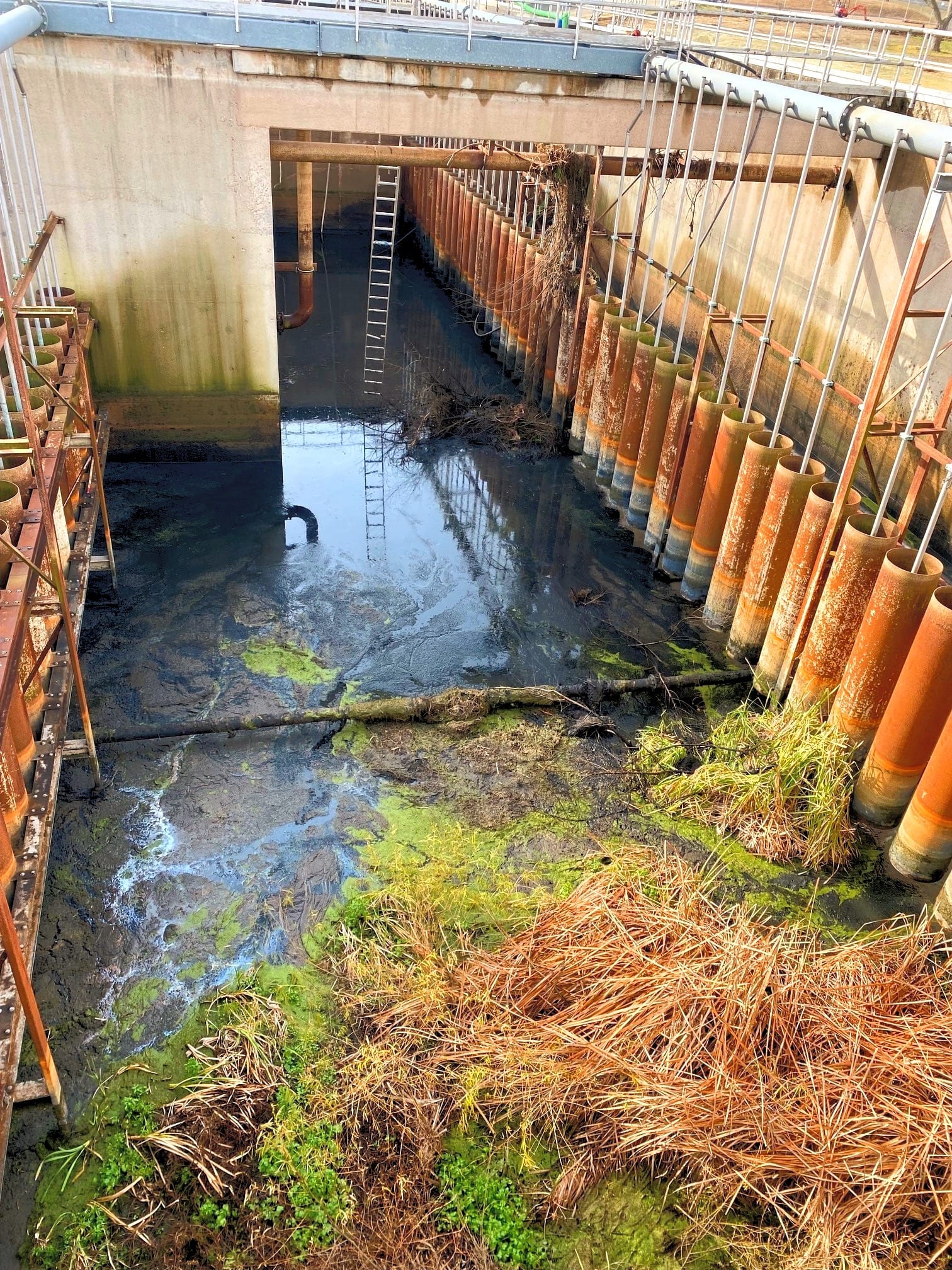
A clarifier only does its job when solids settle, collect, and leave on schedule.
When grit and heavy sludge bank on the floor, the collector has to drag more weight than it was built for. Scum builds on the baffles, weirs foul, and the sludge blanket creeps upward.
The result shows up in your effluent. Solids carry over the weirs, TSS rises, and downstream processes take on load they were not sized for. In a water treatment plant, the same buildup in a settling basin shortens filter runs and raises chemical demand.
Mobile Solids Solutions cleans primary and secondary clarifiers for municipal wastewater plants and water treatment authorities. We use our own equipment and crews, with no subcontractors, and we hand the tank back clean enough to inspect.
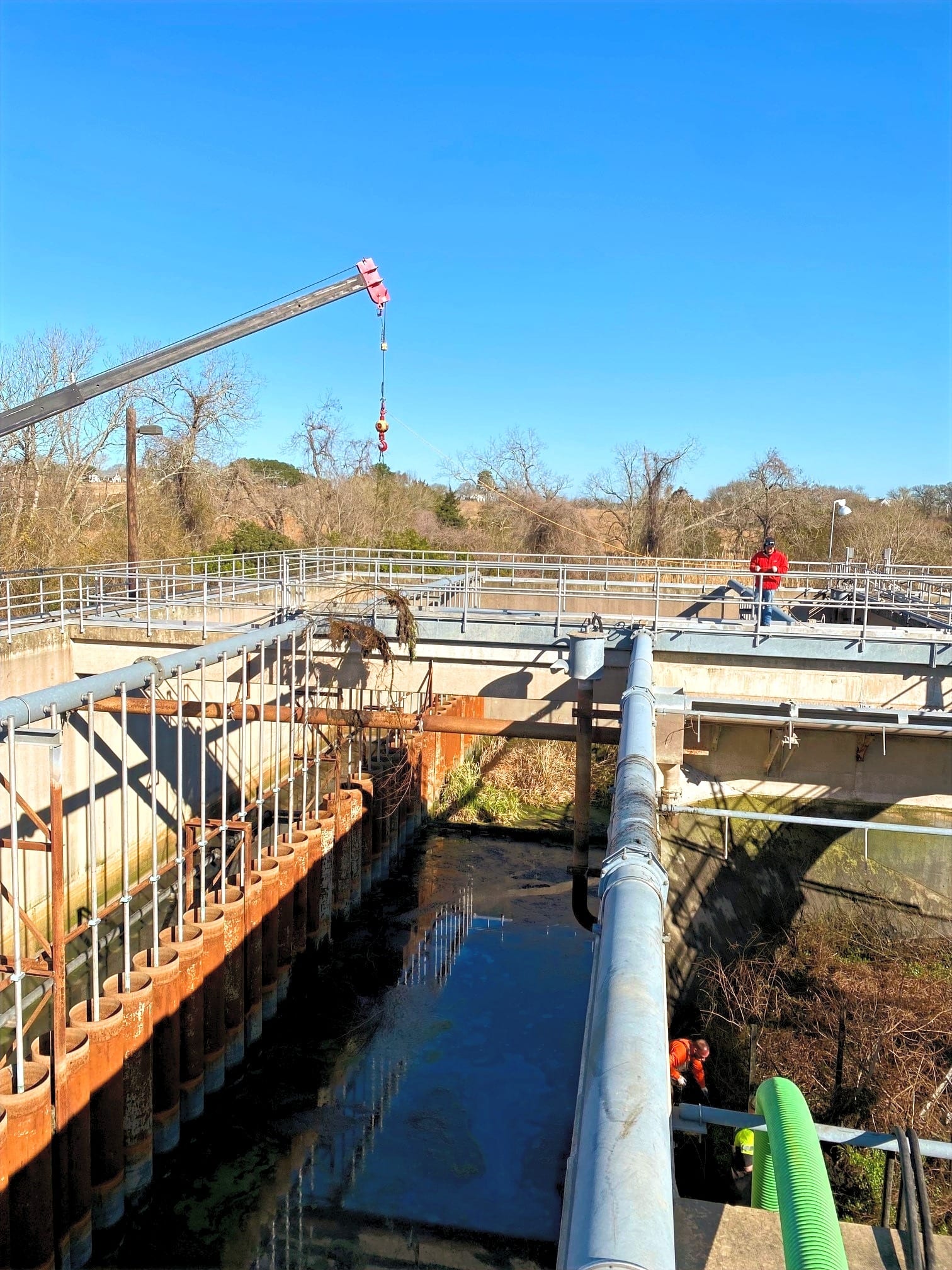
Primary vs. secondary clarifier cleaning
The two tanks collect different material, so the work is planned differently.
Tell us which you are running and we will scope the equipment and crew around it.
How we clean a clarifier
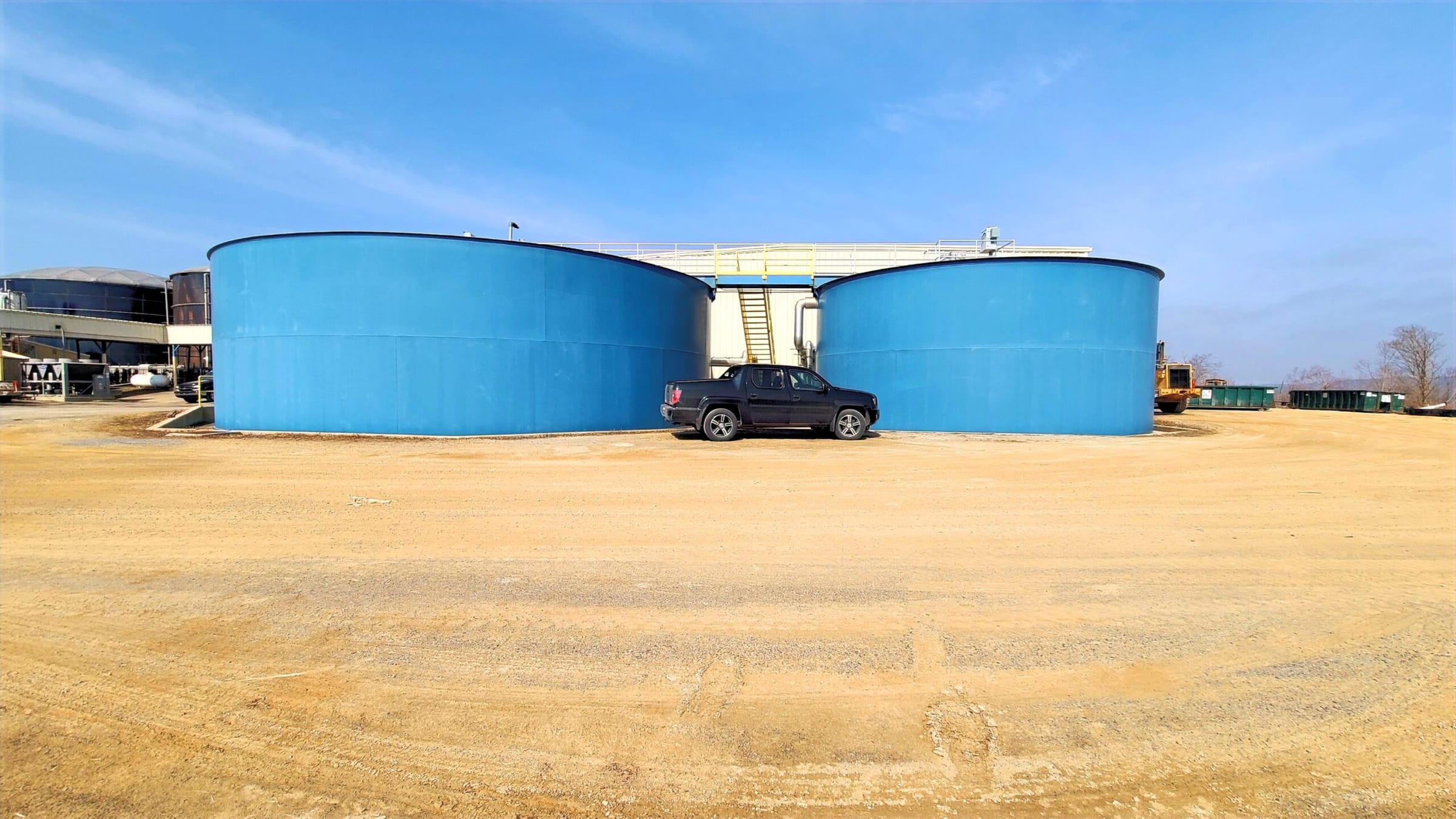
Time the cleanout with your collector maintenance
A clarifier is only empty a few times in its life. That is the best time to inspect and repair the collector, drive, weirs, and concrete. Many plants pair a cleanout with scheduled mechanical work so the tank comes out of service once instead of twice.
We do not repair collectors or concrete ourselves. We clean the tank so your mechanical contractor starts on a clean floor, and we coordinate schedules so the handoff is tight. Our written note from the washdown tells them what to look at first.
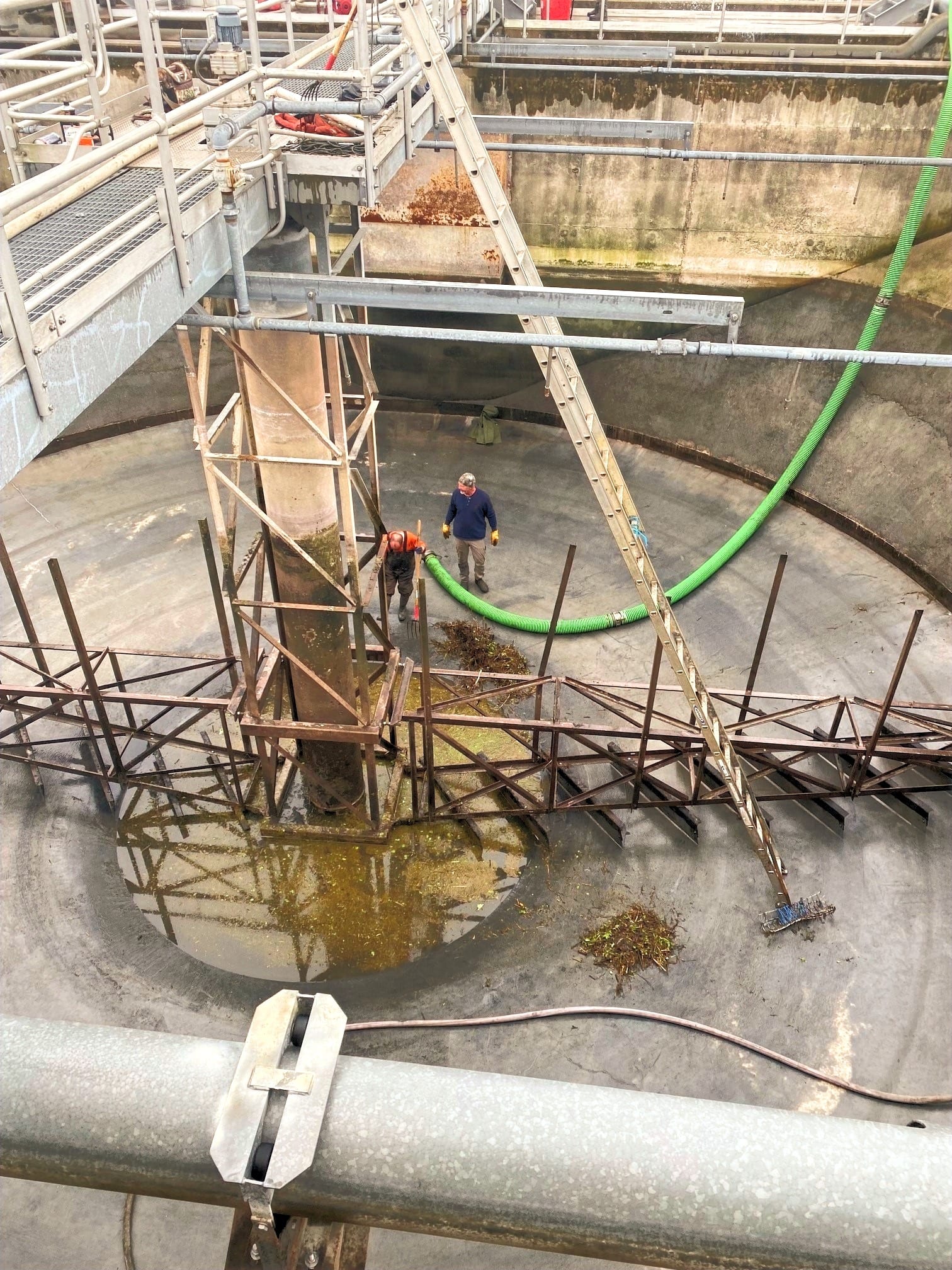
Clarifier sludge is mostly water. Hauling it wet means paying to truck and dispose of water you already treated once. Our mobile belt press runs on your site so what leaves is cake in sealed roll-offs, on our own trucks. That means fewer loads and a disposal invoice based on real solids. See Mobile Belt Press Dewatering.
Built for public-sector buyers
Most of our clarifier work is for municipal authorities and boroughs. We know the job has to fit a board meeting, a budget cycle, and sometimes a bid. We give you a date you can put in front of your board, and we keep it.
Consulting engineers get equipment dimensions, staging requirements, process detail, and references before a spec goes out. Our EMR is 0.78, under the common 1.0 bid threshold, and our office handles insurance certificates, W-9s, and bid paperwork.
We are based at 1505 Berlin Plank Road in Somerset, Pennsylvania. From there we serve wastewater and water treatment plants across western and central Pennsylvania, the Philadelphia area, Maryland, West Virginia, Ohio, and New York. Our equipment has worked jobs in 19 states. If your plant is farther out, send us the tank diameter and depth and we will tell you straight whether the trip makes sense.
What operators ask us first.
How often should a clarifier be cleaned?
Most plants clean when the tank is drained for collector or drive maintenance, or when solids carryover and blanket depth show the floor is loaded. Heavy grit loading upstream shortens the interval.
What are signs a clarifier needs cleaning?
Rising TSS in the effluent, a sludge blanket that stays high, a collector drive running at high torque, scum on the baffles, and fouled weirs are common signs.
Can you clean a clarifier without shutting down the plant?
Yes, at plants with more than one clarifier. We clean one unit while the others carry the flow. Single-clarifier plants need a bypass plan, which we build with your operator first.
Do you repair the sludge collector or drive?
No. We clean the tank and report what we see. Your mechanical contractor handles repairs, and we coordinate so they start on a clean floor.
Do you clean water treatment plant clarifiers?
Yes. We clean settling basins and clarifiers at drinking water plants, including alum and ferric residuals.
Who hauls and disposes of the sludge?
We do, in sealed roll-offs on our own trucks, at a site agreed with you that fits your permit.
How much does clarifier cleaning cost?
It depends on diameter, depth, solids volume, access, and disposal distance. Quotes are free. Send those details and we will return scope, a window, and a price.