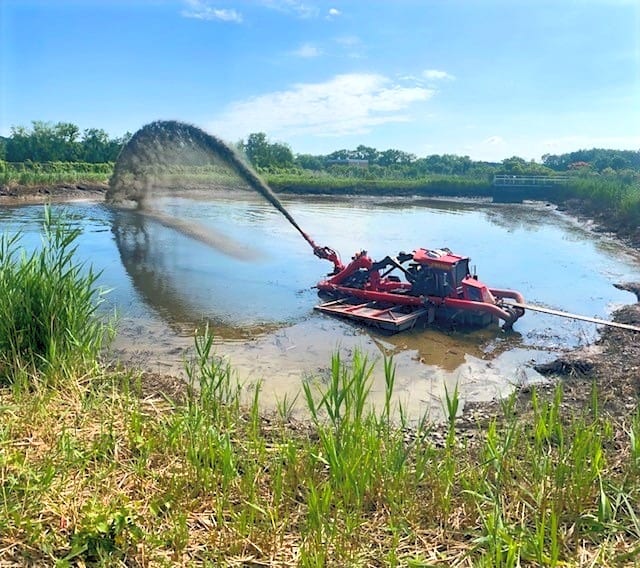
Every treatment lagoon fills with sludge.
Solids settle out year after year, and the blanket slowly takes over the volume the cell was designed around. As it rises, detention time shrinks, freeboard drops, and the lagoon has less room to treat before discharge.
The warning signs are usually in your sampling first: higher TSS and BOD in the effluent, algae problems, odor complaints, or a permit limit that is getting harder to meet. A sludge survey confirms it. When the blanket takes up a large share of the cell depth, it is time to plan a cleanout.
Mobile Solids Solutions cleans municipal treatment lagoons, polishing ponds, and storage cells for authorities, boroughs, and private industry. We use our own equipment and our own crews on every job.
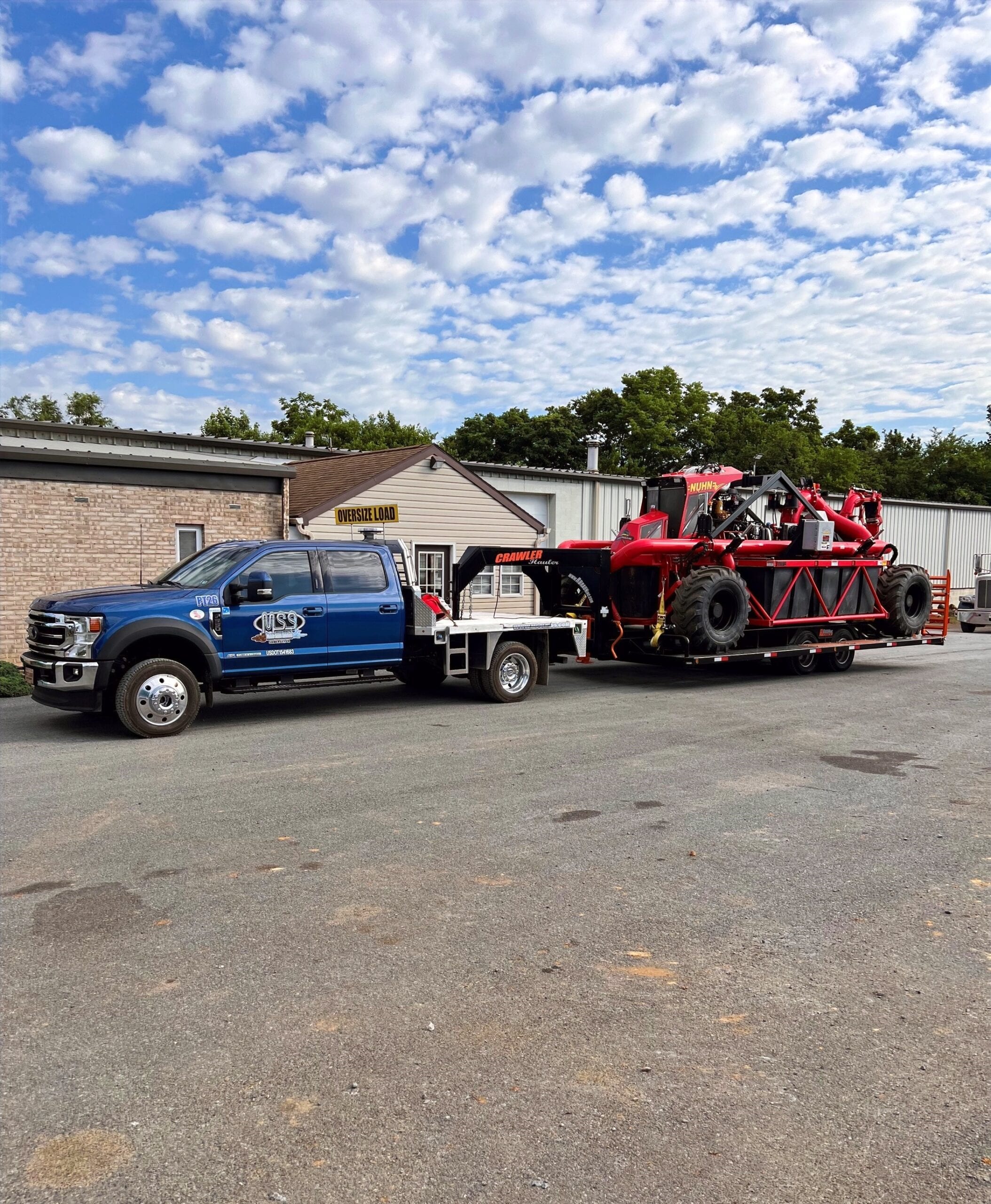
You do not have to drain a lagoon to clean one
The traditional method is to take the cell out of service, let the sludge dry in place over a season, and then bring in excavators and dump trucks. It works, but it costs you the cell for months. It also puts heavy equipment on slopes that were not built for it and can damage the liner.
How a lagoon cleaning job runs
Measured results, in writing
Many lagoon cleanouts are billed on volume removed. That makes the survey the most important document on the job. We survey before we quote and again before we demobilize, so you, your board, and your engineer can see exactly what came out. You should not have to take a contractor's word for it.
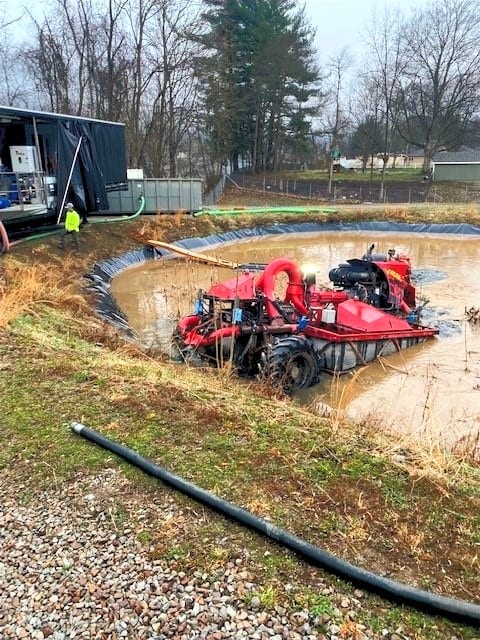
In scope: the pre-job sludge survey, bank access planning, surface sludge removal with the Crawler, continuous pumping, on-site dewatering, hauling and disposal, and the post-job survey.
Not our work: liner repair or relining, berm and embankment reconstruction, aeration equipment repair, and NPDES permit filings. We would rather tell you now than on day two, and we usually know who does that work well in your area.
Seasonal planning for lagoon cleaning
We run crews year-round, but lagoon work is the one service where the season changes the plan. Ice cover and hard freezes limit surface work. In Pennsylvania and the surrounding states, spring through fall is the main window, and those slots book early. Call us well ahead of the season you are targeting.
Small towns and boroughs rely on lagoon systems more than any other type of plant. We work with them across Pennsylvania, Maryland, West Virginia, Ohio, and New York, and our equipment has completed jobs in 19 states. The Crawler, press, and trucks all travel from our yard in Somerset, PA. There is no local subcontractor to line up.
What operators ask us first.
Do we have to take the lagoon offline?
No. The Crawler operates on the surface while the cell keeps treating, so you keep your capacity and your permit compliance throughout.
Will your equipment damage our liner?
The Crawler works from the surface and our press and tanks stay on the bank, so nothing tracks across the liner. Tell us about any known liner issues and we will plan around them.
How do you know how much sludge is in the lagoon?
We survey blanket depth across the cell before quoting and again at the end, and you get both sets of numbers.
How often should a wastewater lagoon be cleaned?
It depends on loading and cell design. Many municipal lagoons go 10 to 20 years between cleanouts. A sludge survey every few years tells you when you are getting close.
Do you dewater on site or haul it wet?
On site. Our belt press runs on the bank so the material leaves as cake, which cuts loads and disposal cost.
Can you clean a lagoon in winter?
We work year-round, but ice and hard freezes affect surface work. Talk to us early about timing.
Do you clean industrial and agricultural ponds too?
Yes. The same method works for industrial process ponds and storage cells. Send us the size and material and we will tell you if it fits.
How much does lagoon cleaning cost?
It depends on cell size, sludge volume, access, and disposal distance. Quotes are free and start with a sludge survey.