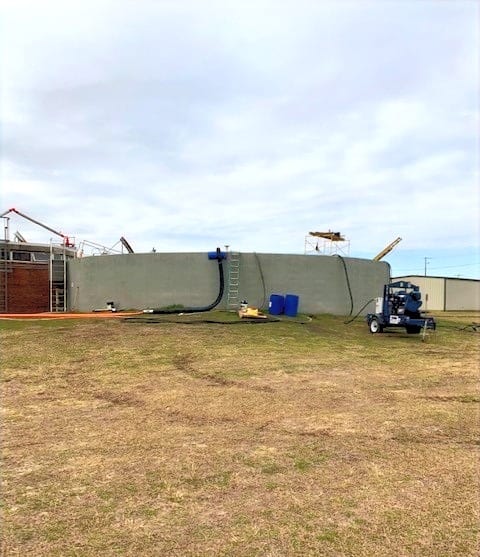
An anaerobic digester loses capacity quietly.
Grit settles on the floor, rags wrap around draft tubes and mixers, and scum and struvite build on the walls. Every foot of that material is volume you built and paid for that is no longer doing any digesting.
The symptoms show up downstream first. Detention time drops, volatile solids reduction slips, gas production falls off, and mixing gets less effective. By the time an operator sees it in the numbers, the buildup has usually been growing for years.
Mobile Solids Solutions cleans anaerobic digesters end to end, with our own equipment and our own crews. We pump the vessel down, dewater the contents on your site, and then send certified crews inside to clean the floor, walls, and internal structures by hand.
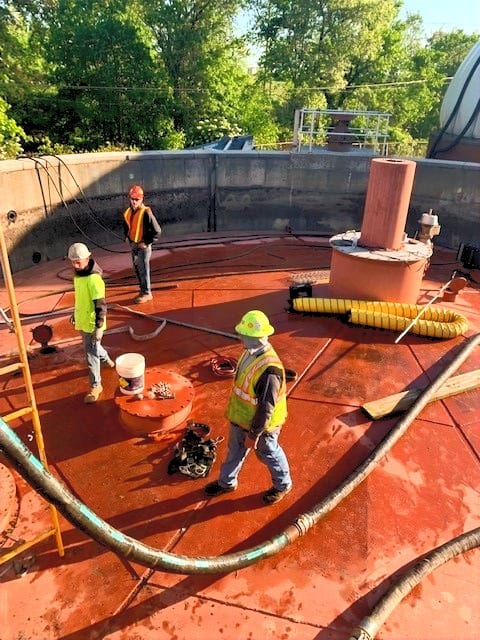
A vacuum truck can lower the level. It cannot reach the floor.
Our digester cleaning process, start to finish.
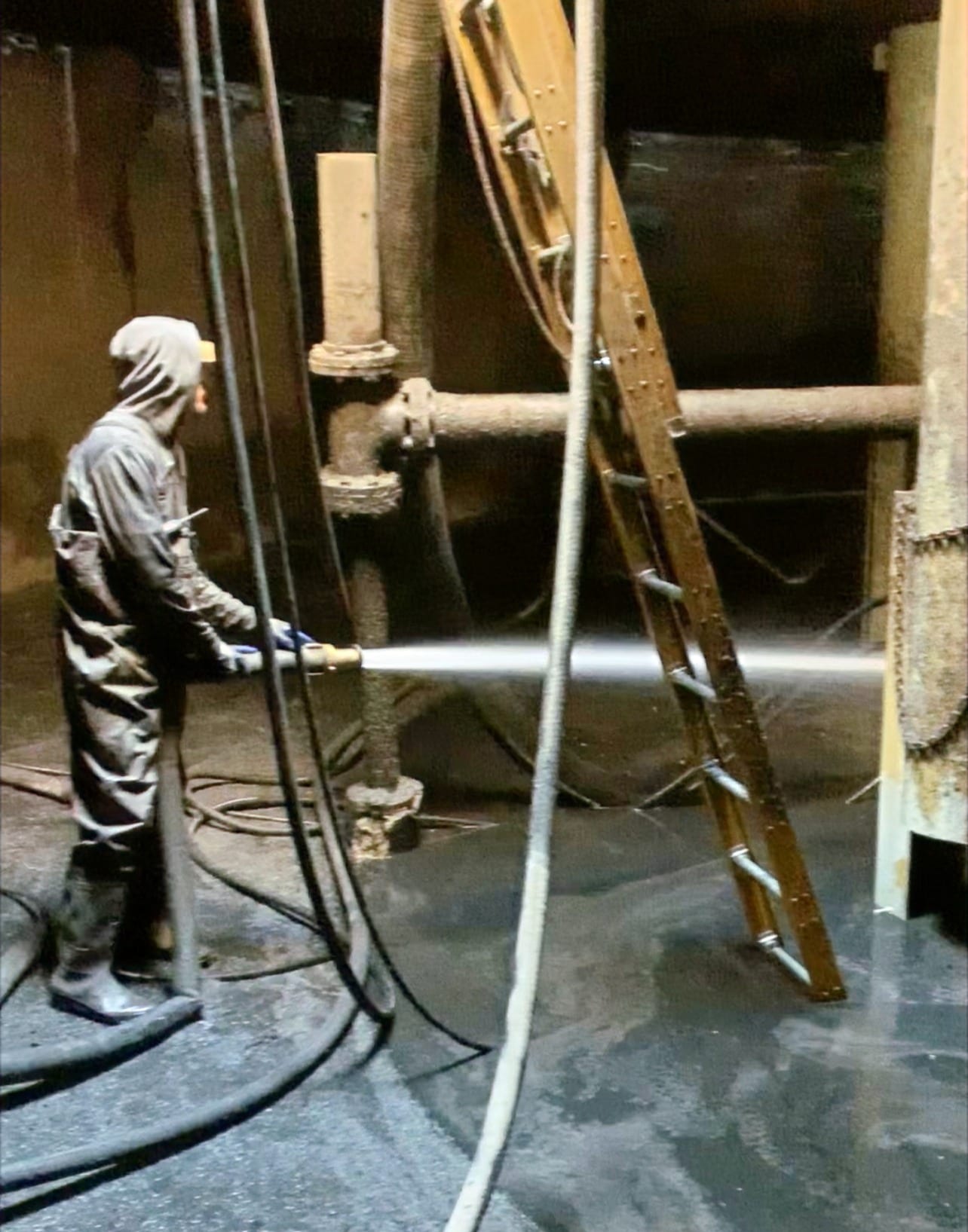
Confined-space entry is the part that decides your next interval.
A digester is a permit-required confined space under OSHA 29 CFR 1910.146. It can hold hydrogen sulfide, methane, and oxygen-deficient air long after it has been drawn down. Entry takes atmospheric monitoring, ventilation, an attendant, and a rescue plan every time.
Our crews are OSHA 10 certified and work year-round. We plan entry with your operator before the job is scheduled, not on the morning we arrive. Once inside, the crew works the places that decide how long the vessel stays clean: the floor where grit banks, the draft tubes where rag wraps, and the walls where scale builds.
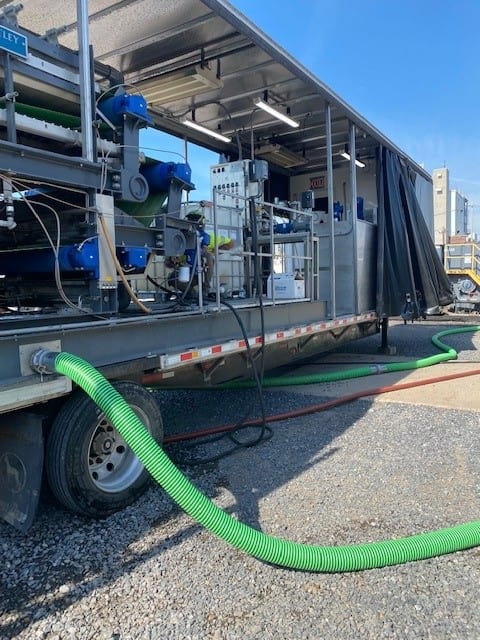
Dewatering on site lowers the hauling and disposal bill.
Digester contents are mostly water. Hauling them wet means paying to truck water you already treated, then paying again by the ton to dispose of it.
We bring our mobile belt press to your pad and dewater before anything leaves. The water returns to your process and the solids leave as cake in sealed containers. That means fewer loads out the gate and a disposal invoice based on what is actually waste.
Equipment we own and bring to your plant.
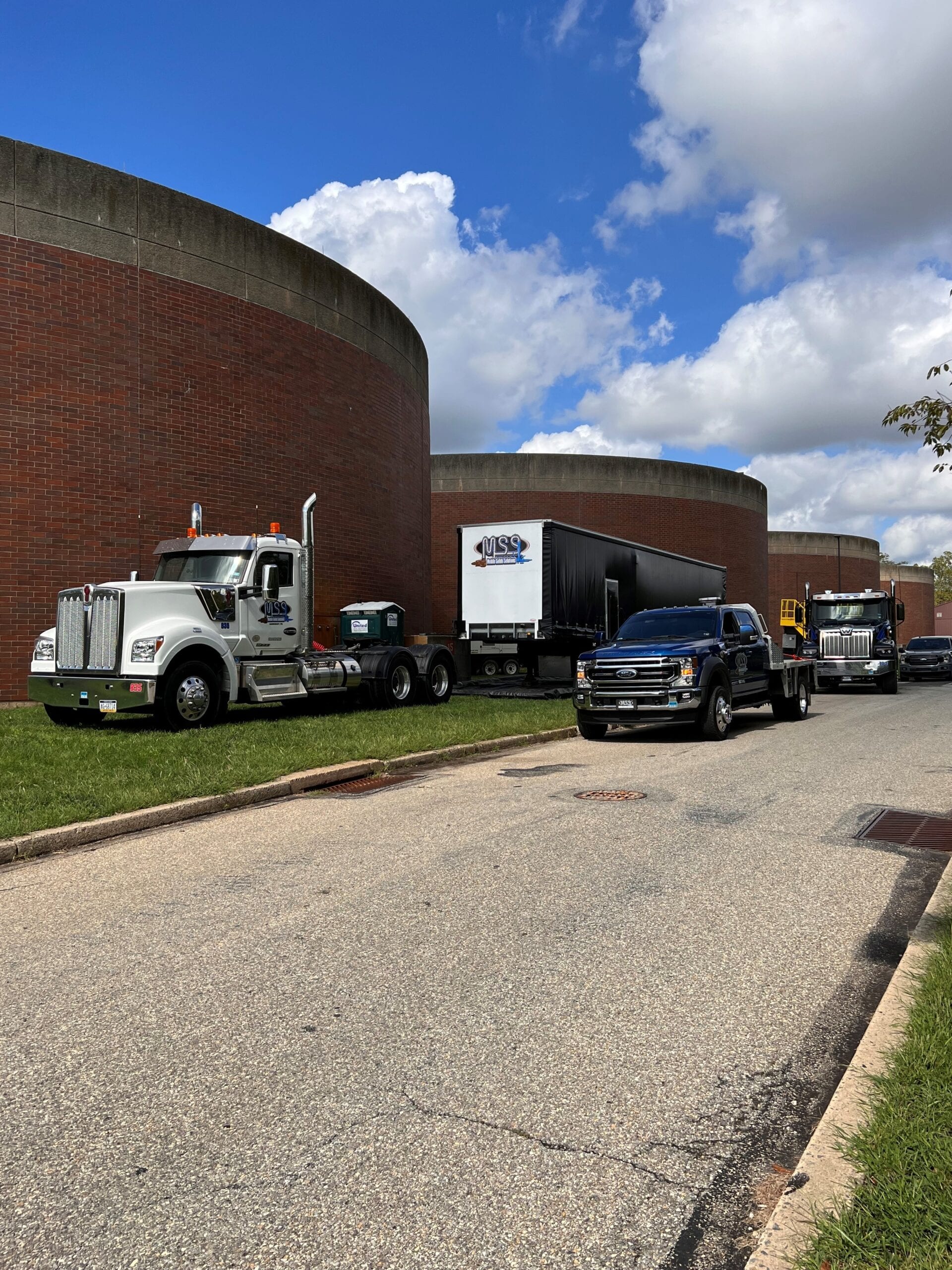
Mixing tanks and polymer feed, the mobile belt press, pumps and fittings sized for full drawdown, crane and roll-off trucks, sealed containers, and our own generators. We run on power we brought, so there is no tie-in to your plant service and no waiting on an electrician.
Owning the equipment is what lets us commit to a date. There is no third-party dispatcher between you and the job.
Planning a digester cleanout at a municipal plant.
Most digester cleanouts are scheduled months ahead and budgeted as capital or maintenance work. A plant running one digester needs more planning than one running two, because solids handling has to go somewhere while the vessel is down. We walk through that with your operator and your consulting engineer before anything is booked.
We will send equipment dimensions, staging and access requirements, process detail, and references with no sales call attached. Our 0.78 EMR sits under the common 1.0 bid threshold, and our office can supply insurance certificates, W-9s, and bid documents.
Our yard is in Somerset, Pennsylvania, and our equipment travels on our own trucks. We regularly work for municipal authorities and boroughs across Pennsylvania, from Pittsburgh and Johnstown to Harrisburg and Philadelphia, and throughout Maryland, West Virginia, Ohio, and New York.
We have completed jobs in 19 states, from Minneapolis to Miami and Houston to the New Hampshire line. Distance changes the schedule, not the scope. See where we work.
What operators ask us first.
How often should an anaerobic digester be cleaned?
It depends on grit removal upstream, mixing, and loading. Many municipal plants clean every 5 to 10 years. Falling gas production, reduced volatile solids destruction, or a shrinking working volume are signs it is due.
Do you enter the digester or just pump it out?
We enter it. After pump-down and atmospheric testing, certified crews clean the floor, walls, and internal structures by hand. Pumping alone leaves the grit and rag that shorten your next interval.
How long will our digester be out of service?
Across the digester cleanouts in our job record the median is around 43 days on site, with smaller vessels finishing in under two weeks and multi-digester plants running considerably longer. Send us diameter, depth, grit buildup and time since the last cleaning and we will give you a window before you commit.
Do we have to take the whole plant offline?
No. We work one vessel at a time and plan around your process with your operator.
Who handles hauling and disposal?
We do, in sealed roll-offs on our own trucks. The disposal site is agreed with you in advance so it fits your permit and your state's residuals rules.
Can you work to our state DEP and permit requirements?
Yes. Residuals rules vary by state, and we build your permit conditions into the scope before the job starts.
Do you clean digesters outside Pennsylvania?
Yes. We are based in Somerset, PA and have worked in 19 states. Send us the vessel type and volume and we will tell you honestly whether the mobilization makes sense.
How much does digester cleaning cost?
Price depends on vessel size, volume of solids, access, and disposal distance. Quotes are free. Send dimensions, rough volume, and time since the last cleanout and we will return scope, a window, and a price.