A tanker leaving your plant with thin sludge is mostly carrying water you already paid to treat.
You pay to move it, and then you pay again by the ton to dispose of it. The water is most of the load, and it is the most expensive thing on the truck.
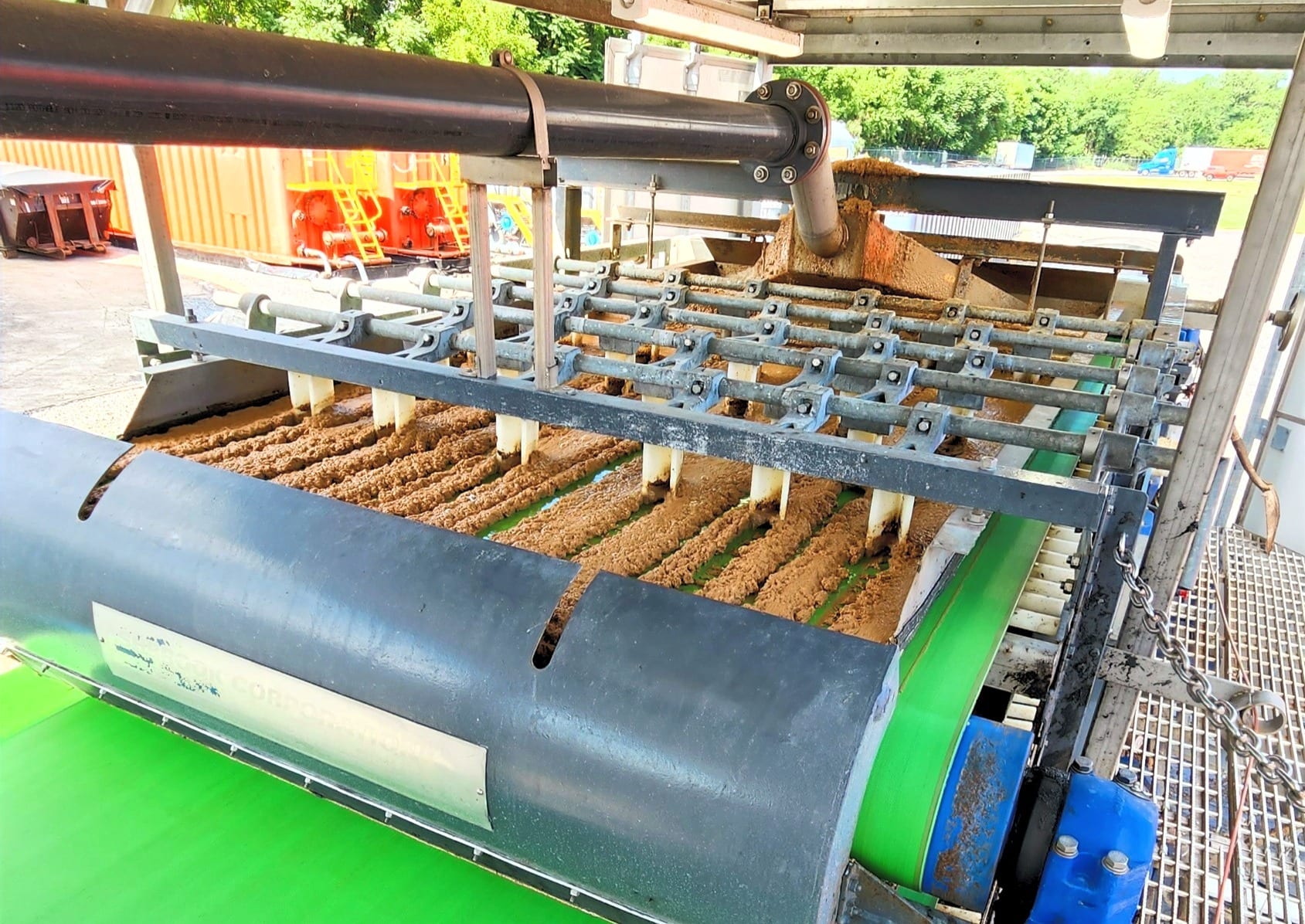
Mobile dewatering fixes that at the source. We set up our belt press on your pad, condition the sludge with polymer, and separate the water from the solids before anything leaves. The filtrate goes back to your process, and the solids leave as cake in sealed containers. You move the same solids on far fewer loads, and your disposal bill reflects what was actually waste.
When plants call for mobile dewatering
How a mobile dewatering job runs
Why a bench test comes before the price
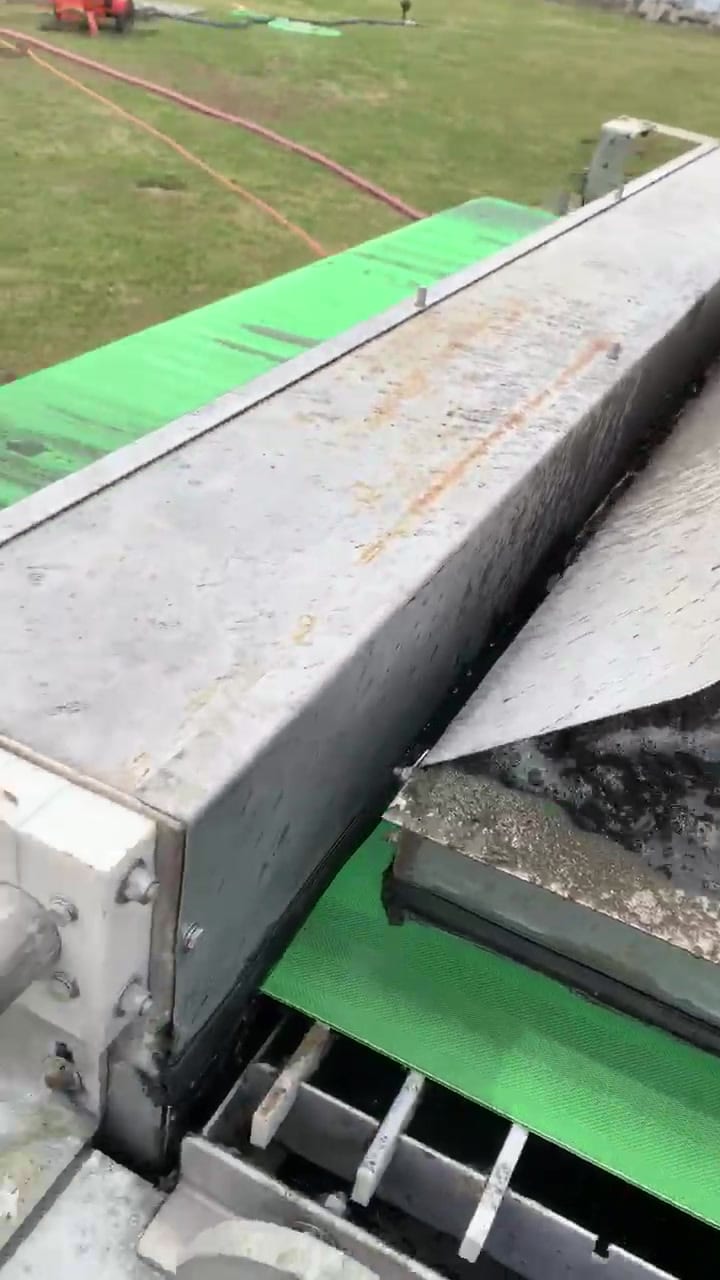
Every sludge dewaters differently. Digested sludge, raw primary sludge, waste activated sludge, lagoon sludge, and water plant residuals each respond to polymer in their own way. Any contractor who quotes a volume reduction before seeing your material is guessing. The bench test gives you real numbers to build a budget on and keeps the job from running long.
Hauling wet vs. dewatering on site
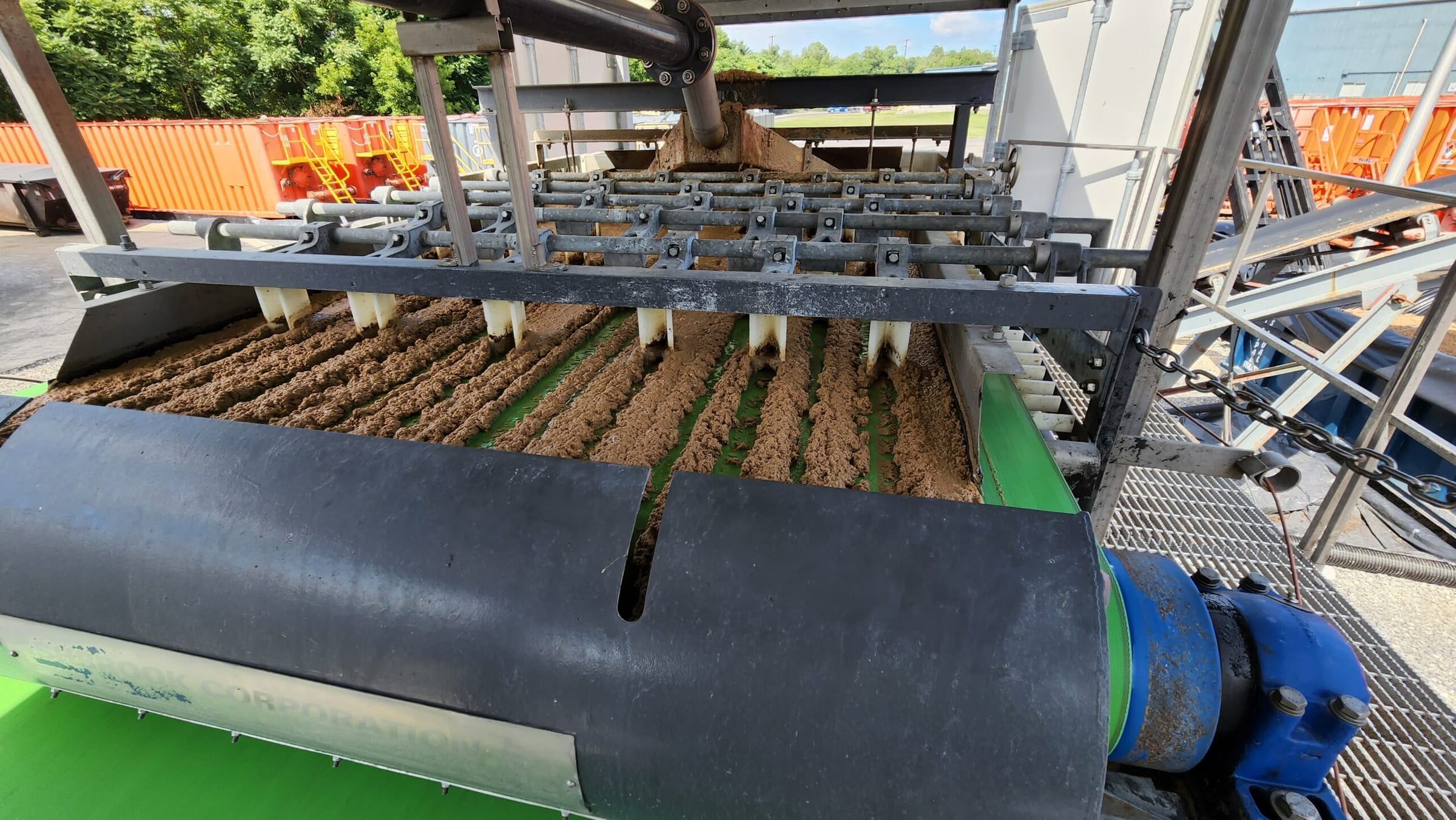
| | Haul it wet | Press it on site | | --- | --- | --- | | What is on the truck | Solids plus all the water carrying them | Cake. The water stays on your site | | Number of loads | Set by liquid volume | Set by the solids you need to remove | | Disposal cost | Charged by the ton on mostly water | Charged on what is actually waste | | Your plant | A queue of tankers to schedule | One press, one pad, and a filtrate return |
Self-contained, on our own power
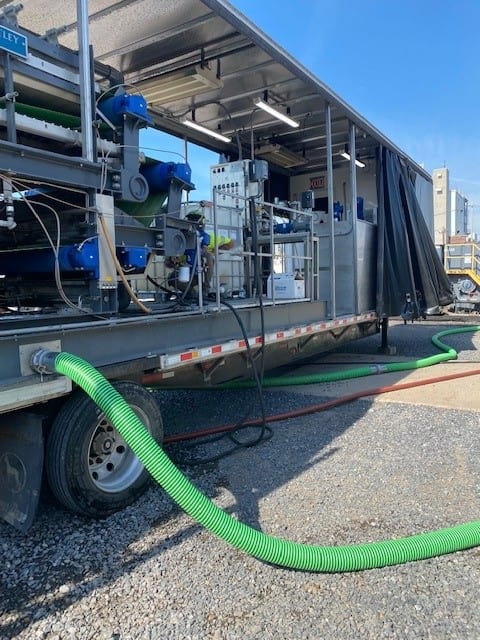
Our dewatering spread includes the mobile belt press, mixing tanks and polymer feed, pumps and hose sized for your layout, crane and roll-off trucks, sealed containers, and our own generators. We do not tie into plant power, draw on your electrical, or wait on an electrician. All you need to provide is a pad to set up on and a place for the filtrate to return.
We are based in Somerset, Pennsylvania and mobilize on our own trucks. We provide mobile dewatering for municipal authorities, boroughs, and industrial plants across Pennsylvania, Maryland, West Virginia, Ohio, and New York, and we have worked in 19 states. If you are weighing whether mobilization makes sense for your volume, send us a rough number and we will tell you honestly.
What operators ask us first.
Can we book dewatering on its own, without a cleanout?
Yes. The service stands alone and mobilizes the same way.
How much volume reduction should we expect?
It depends on your material. The bench test before we quote gives you a real figure, not a guess.
Where does the filtrate go?
Back to your process at a rate agreed with your operator. We will flag it if your headworks may be tight.
Do you need our power or water?
No power. We run on our own generators. We will confirm any water needs for washdown during setup.
What is the difference between a belt press, a centrifuge, and a screw press?
All three separate water from solids. A belt press squeezes conditioned sludge between belts. A centrifuge spins it. A screw press uses a slow rotating screw. We run belt presses because they handle a wide range of municipal sludge well, are simple to operate on site, and have low power demand.
Can you cover while our permanent press is down?
Yes. Tell us your daily volume and how long your equipment will be out.
Who hauls and disposes of the cake?
We do, in sealed roll-offs on our own trucks, at a site that fits your permit and your state's residuals rules.